
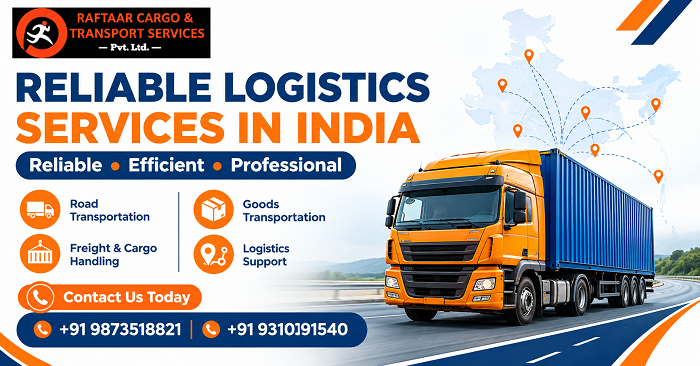
Reliable logistics services in India play an important role in connecting businesses, manufacturers, wholesalers, retailers, and customers across the country. As India's commercial and industrial sectors continue to develop, the movement of goods has become an essential part of everyday business operations. Companies need dependable transportation, organized shipment handling, timely delivery coordination, and efficient supply chain processes to meet customer expectations and maintain business continuity.
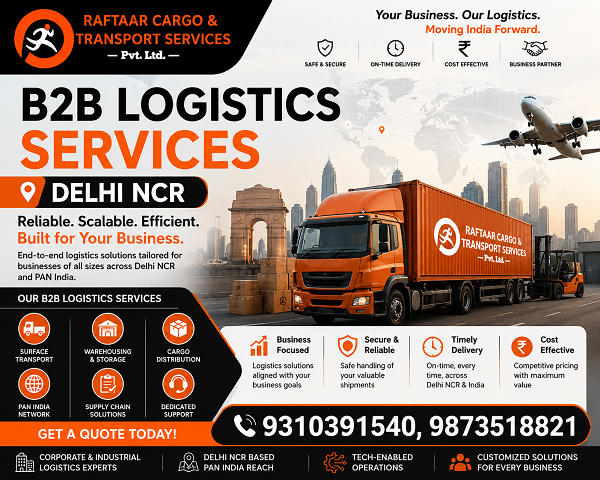
Raftaarcargo focuses on the importance of organized cargo movement and logistics planning for businesses that depend on the transportation of goods. Whether a company needs to move commercial products, industrial materials, business consignments, or other eligible shipments, selecting an appropriate logistics solution can help improve operational efficiency and simplify transportation management.
Modern logistics involves more than moving a shipment from one location to another. It includes planning transportation routes, coordinating pickup and delivery, managing shipment information, selecting suitable transportation methods, handling documentation, and keeping customers informed about the movement of their goods. When these activities are properly coordinated, businesses can manage inventory more effectively, reduce avoidable delays, and improve the overall customer experience.
India's large geographical area and diverse business environment create different transportation requirements. A small business sending products to another city may need a different service from a manufacturer moving bulk commercial goods or a company shipping time-sensitive consignments. Understanding these requirements helps businesses choose suitable logistics arrangements based on shipment size, destination, urgency, handling needs, and budget.
In this guide, we explore the importance of reliable logistics services in India, the different transportation options available, the benefits of professional logistics planning, and the factors businesses should consider when selecting a logistics partner. Raftaarcargo aims to help businesses understand these essential logistics considerations and make more informed decisions about cargo transportation.
Reliable logistics services involve the organized planning, coordination, transportation, and delivery of goods from their origin to their intended destination. These services help businesses move products through the supply chain while managing schedules, shipment information, transportation requirements, and delivery expectations.
Reliability in logistics means more than speed. It also involves clear communication, appropriate shipment handling, transparent service terms, accurate documentation, and consistent coordination throughout the transportation process. A reliable logistics arrangement should give customers a clear understanding of the services being provided and the responsibilities involved.
Depending on the logistics provider and shipment requirements, services may include cargo pickup, transportation booking, freight coordination, shipment documentation assistance, warehousing arrangements, distribution support, and delivery coordination. Not every provider offers all these services, so businesses should confirm the available options before making a booking.
Reliable logistics is particularly important for businesses that work with regular delivery schedules, inventory targets, production timelines, or customer commitments. A well-planned transportation process helps these businesses coordinate their operations and respond more effectively to changes in demand.
India has a broad network of manufacturing centres, agricultural markets, industrial areas, distribution hubs, ports, airports, wholesale markets, and retail destinations. Goods frequently travel between cities, states, warehouses, factories, and customer locations. Efficient logistics helps connect these different parts of the economy.
Businesses operating across India may face challenges such as long transportation distances, traffic congestion, changing weather conditions, route restrictions, handling requirements, and differences in regional infrastructure. A structured logistics plan can help businesses anticipate these challenges and select transportation arrangements appropriate for their shipments.
Reliable logistics services are also important for businesses that serve customers in multiple locations. Retailers, online sellers, distributors, manufacturers, and wholesalers all depend on the movement of goods to maintain stock availability and meet delivery expectations.
When logistics operations are poorly coordinated, businesses may experience delayed deliveries, increased storage requirements, missed production schedules, communication gaps, and higher operational costs. Careful planning and suitable logistics support can help reduce avoidable problems.
For businesses seeking reliable logistics services in India, the objective should be to select a solution that balances delivery timelines, transportation costs, shipment safety, visibility, and service requirements.
Logistics is a broad field that includes several transportation and supply chain activities. The most appropriate service depends on the type of goods being transported, shipment volume, distance, delivery deadline, and budget.
Road transportation is widely used for moving goods between cities, industrial locations, warehouses, and distribution centres. It can support full-truckload shipments, smaller consignments, regional distribution, and last-mile delivery, depending on the provider's network.
Road transport offers flexibility for many domestic shipments because vehicles can connect pickup and delivery locations directly when road access is available. It may be suitable for commercial goods, packaged products, equipment, furniture, and other cargo that meets vehicle capacity and handling requirements.
Businesses should consider the distance, road conditions, vehicle type, cargo dimensions, loading requirements, transit estimates, and delivery location when evaluating road transportation. The lowest quotation may not always provide the best overall value if it does not meet the shipment's handling or scheduling needs.
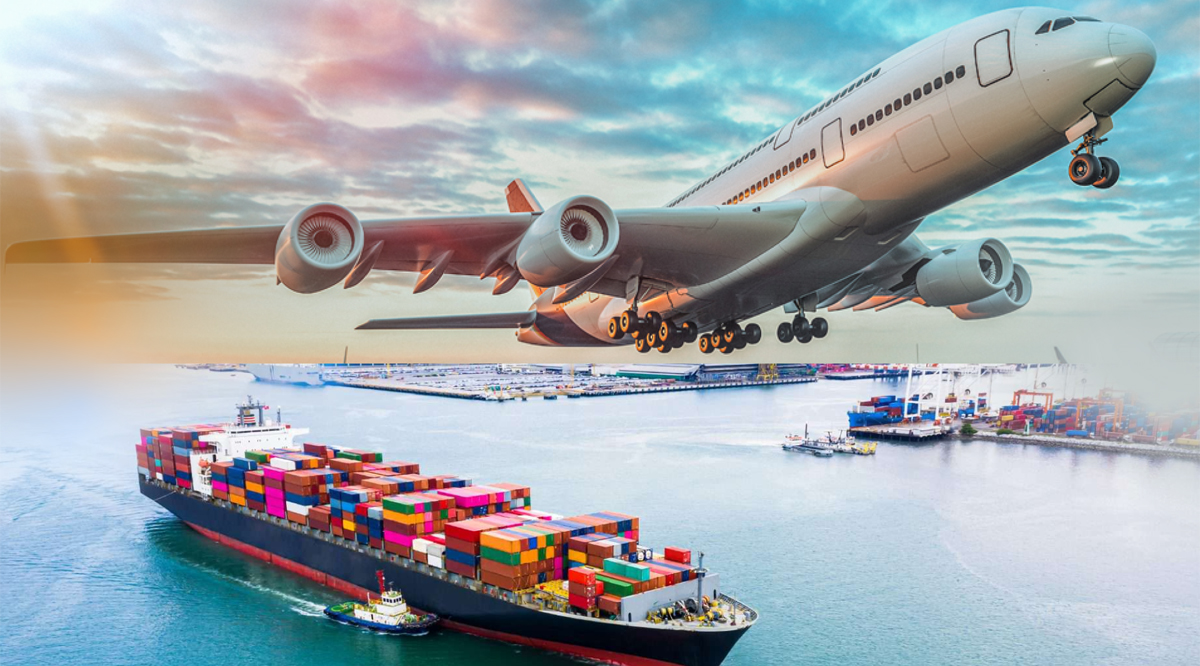
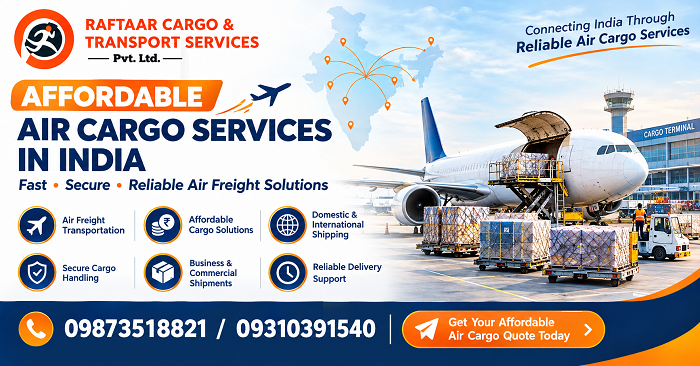
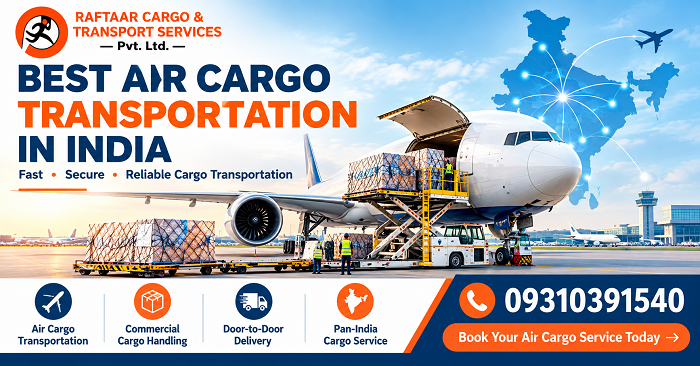
Air cargo services are often considered when delivery speed is important or when goods need to travel over long distances within a limited timeframe. Air freight can support eligible commercial shipments, documents, electronics, selected industrial components, and other goods accepted under applicable carrier rules.
Air transportation can help businesses reduce transit time compared with some surface transportation options. However, the complete shipment timeline may also include pickup, terminal handling, security checks, documentation, customs clearance where applicable, and final delivery.
Air freight costs can depend on the shipment's actual weight, volumetric weight, dimensions, destination, service level, fuel-related charges, and handling requirements. Certain goods may be restricted or require special documentation. Businesses should provide accurate shipment details when requesting a quotation.
Raftaarcargo's logistics content highlights the importance of comparing transportation options according to urgency, cargo characteristics, destination, and budget rather than choosing a method based on speed alone.
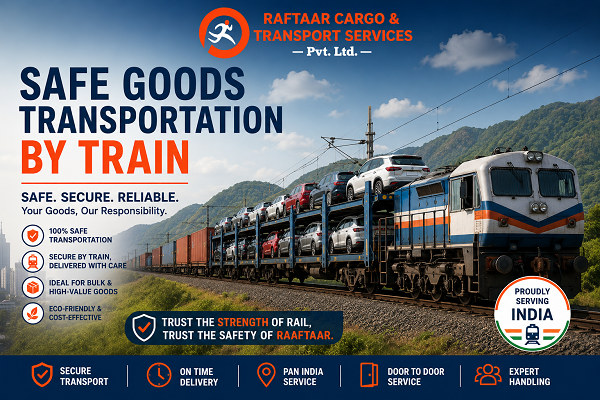
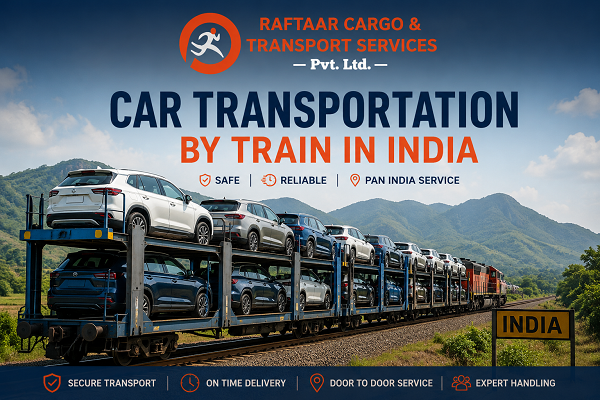
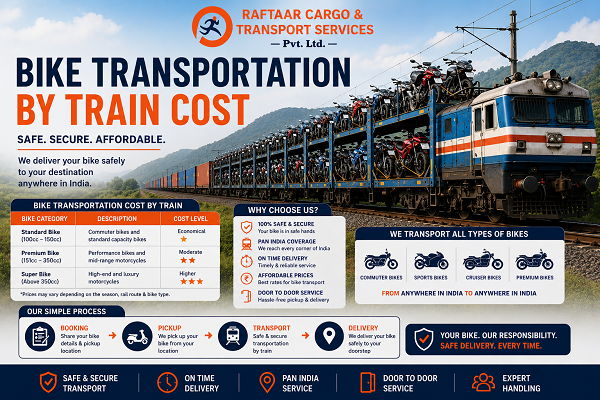
Rail cargo can be useful for certain domestic shipments, particularly when businesses need to transport larger quantities of goods over suitable rail routes. Depending on the cargo and service arrangement, rail transportation may provide an option for bulk goods, industrial materials, and selected commercial consignments.
Rail freight availability depends on route connectivity, terminal access, cargo acceptance rules, loading arrangements, and delivery requirements. Additional transportation may be needed between the sender's premises and the railway terminal or between the destination terminal and the final delivery point.
Businesses comparing rail and road transportation should consider the complete door-to-door process rather than evaluating only the main transit segment. Handling, terminal movement, delivery coordination, and schedule requirements all affect the final decision.
Freight forwarding involves coordinating the movement of goods through one or more transportation services. Depending on the provider's role, this may include booking cargo space, coordinating carriers, arranging shipping documentation, and assisting with shipment planning.
Freight forwarding can be particularly useful for businesses managing complex shipments, multiple transportation stages, or international movement. The exact services depend on the agreement, operating network, and destination requirements.
Before selecting a freight forwarder, businesses should confirm service responsibilities, documentation support, handling arrangements, shipment tracking options, insurance responsibilities, and any third-party charges.
Warehousing provides storage space for goods before they are dispatched, distributed, or delivered. Distribution activities help move products from storage facilities to retailers, business customers, or other destinations.
Warehousing can support businesses that need to maintain stock across different locations or manage changes in demand. Appropriate storage conditions are important for protecting products and maintaining inventory accuracy.
Businesses should check warehouse access, inventory procedures, storage charges, security arrangements, loading facilities, and the provider's ability to handle the type of goods involved. Specialized products may require temperature control, careful stacking, or other specific conditions.
Last-mile delivery refers to the final stage of transporting goods to the recipient. This stage can be especially important for retailers, e-commerce sellers, distributors, and businesses delivering products directly to customers.
Successful last-mile operations depend on accurate addresses, delivery scheduling, local route planning, recipient availability, and clear communication. Failed delivery attempts can create additional transportation costs and delay customer orders.
Businesses should select a last-mile solution that matches their delivery locations, package sizes, customer expectations, and required proof-of-delivery procedures.
Reliable logistics can support business operations in several ways. The benefits depend on the quality of the service, the suitability of the transportation method, and how effectively the logistics arrangement fits the company's needs.
A structured logistics process helps businesses plan dispatches and coordinate expected delivery windows. Clear communication between the sender, transportation provider, and recipient can make it easier to manage schedules and respond to potential delays.
Businesses should ask providers how transit estimates are calculated, how delays are communicated, and what information is available during shipment movement. Delivery commitments should be based on the agreed service terms and actual route conditions.
Goods may be exposed to movement, loading, unloading, weather, and storage conditions during transportation. Suitable packaging, accurate labelling, appropriate vehicle selection, and careful handling procedures can reduce the risk of avoidable damage.
Businesses shipping fragile, heavy, valuable, or sensitive goods should communicate handling requirements before booking. They should also confirm whether special packaging, restricted-goods documentation, or additional handling charges apply.
Coordinated logistics helps businesses focus on their core activities instead of managing every transportation detail independently. A suitable logistics arrangement can help organize dispatch schedules, maintain communication, and support more predictable inventory movement.
For businesses with regular shipments, reviewing transportation performance and consolidating compatible shipments may help simplify administration and improve planning. These benefits depend on shipment patterns and the services available.
Transportation expenses can affect product margins and overall business costs. Logistics planning can help businesses compare suitable routes, shipment sizes, delivery speeds, handling requirements, and available service levels.
Cost management does not always mean choosing the cheapest carrier. A low initial rate may not include pickup, packaging, special handling, terminal charges, insurance, taxes, or final delivery. Comparing the complete quotation helps businesses understand the actual cost of moving goods.
Customers value accurate delivery information, clear communication, and appropriate handling of their orders. Businesses that coordinate logistics effectively may find it easier to provide dependable service and manage customer expectations.
Shipment updates, realistic delivery estimates, clear escalation procedures, and prompt communication about exceptions can help build confidence between businesses and their customers.
Selecting a logistics company requires more than comparing prices. Businesses should evaluate the provider's capabilities, service coverage, communication process, handling standards, documentation support, and suitability for the required shipment.
Start by identifying what needs to be transported, where it needs to go, how much cargo is involved, and when it must arrive. Consider whether the shipment requires road transport, air freight, rail cargo, or a combination of methods.
Also determine whether you need pickup from your premises, warehouse storage, special packaging, delivery appointments, or assistance with shipping documents. A clear requirement list helps providers prepare more accurate quotations.
Confirm whether the provider serves the origin and destination locations. Some companies focus on selected regions, while others coordinate broader domestic or international shipments through their networks and partners.
Ask whether the quoted service covers the complete route or only a portion of it. Clarify who is responsible for pickup, terminal handling, intermediate transfers, customs-related arrangements, and final delivery.
Delivery estimates can vary by transportation method, route, shipment type, and service level. Ask for an estimated transit time and clarify whether it includes pickup, handling, and final delivery.
For time-sensitive cargo, check the provider's procedures for managing missed connections, operational disruptions, or other delays. Avoid relying on an unqualified delivery promise when external factors can affect the schedule.
Request a written quotation that identifies the main transportation charge and any applicable additional fees. These may include pickup charges, fuel surcharges, handling costs, packaging, storage, special equipment, insurance, taxes, and destination delivery.
For air freight, provide the actual weight and package dimensions because chargeable weight may differ from the scale weight. For road and rail cargo, vehicle capacity, loading requirements, route distance, and cargo type can affect the final price.
Clear communication helps businesses understand the status of their shipments and respond to unexpected changes. Ask how shipment updates are provided and whether tracking references, delivery confirmations, or customer support contacts are available.
For recurring shipments, a defined communication process can help teams coordinate dispatches, resolve documentation questions, and inform recipients of changes in delivery schedules.
Different types of shipments require different documents. Depending on the cargo and route, these may include invoices, packing lists, transport documents, declarations, permits, or customs paperwork.
Businesses should confirm which documents they must provide and which tasks the logistics provider has agreed to handle. Restricted or regulated goods may require additional approvals and must comply with carrier and government rules.
Businesses should understand how the logistics provider addresses loss, damage, delay, and claims. The applicable liability terms may depend on the service agreement, transportation mode, and governing rules.
Do not assume that standard freight charges automatically include comprehensive insurance. Review the coverage, exclusions, claim procedure, documentation requirements, and deadlines before dispatching valuable goods.
Small and medium businesses often need logistics services that match their shipment volume, operating budget, and customer commitments. They may not have the resources to maintain their own transportation fleet or manage a dedicated logistics department.
Using an appropriate external logistics provider can help these businesses arrange transportation as required. Depending on availability, they may choose individual shipments, scheduled deliveries, consolidated cargo, or other service options suited to their operations.
Smaller businesses should pay attention to minimum shipment charges, pickup requirements, delivery coverage, packaging responsibilities, payment terms, and the process for resolving shipment issues. These details can have a significant impact on the overall cost and convenience of logistics services.
For growing companies, logistics requirements may change as customer demand expands into additional cities or states. Reviewing shipment patterns periodically can help businesses decide whether they need a different transportation method, a more structured dispatch process, or additional storage and distribution support.
Manufacturers rely on the movement of raw materials, components, machinery, and finished products. Transportation delays can affect production schedules, stock availability, and delivery commitments to business customers.
Reliable logistics planning can help manufacturers coordinate inbound supplies and outbound shipments. Depending on the product, road, rail, and air freight may serve different purposes within the same supply chain.
Heavy or oversized cargo may require specialized vehicles, lifting equipment, permits, route surveys, or advance coordination. Businesses should provide accurate cargo dimensions, weight, packaging details, and loading information before requesting a quotation.
For urgent replacement parts or time-sensitive components, air freight may be worth evaluating when the value of faster movement justifies the additional cost. Less urgent bulk shipments may be better suited to another transportation mode. The best option depends on the business's operational priorities.
E-commerce and retail businesses need to coordinate product storage, order processing, dispatch, delivery, and returns. Customer expectations often include accurate delivery estimates and timely updates about orders.
Logistics requirements may differ depending on whether a retailer sends a few parcels each day or dispatches large quantities to distribution centres. Shipment volume, package dimensions, destination coverage, returns handling, and proof of delivery are all important considerations.
Businesses should review how a logistics provider manages failed delivery attempts, address corrections, damaged parcels, and returns. A clear process for handling exceptions can help reduce confusion and improve the customer experience.
As an online business grows, shipment data can also help identify recurring delivery challenges. Reviewing delivery performance, cost per shipment, damage rates, and return patterns supports better logistics decisions over time.
Air cargo plays an important role in supply chains where transit speed, long-distance movement, or delivery deadlines are major considerations. It may be suitable for urgent documents, selected commercial products, spare parts, samples, and other goods accepted by the airline or cargo operator.
However, air freight is not automatically the right choice for every shipment. Businesses should compare total transit time and cost against road, rail, or sea freight where those options are available and appropriate.
Air cargo pricing often depends on chargeable weight, which may be calculated using the greater of actual weight and volumetric weight under the carrier's applicable rules. Accurate package dimensions are therefore essential when requesting a quotation.
Air cargo shipments may also require specific documentation, security screening, packaging, and compliance with restrictions for hazardous or otherwise controlled items. Businesses should disclose the cargo contents accurately and confirm acceptance requirements before dispatch.
Domestic logistics involves the movement of goods within India. Businesses may need to transport cargo between cities, states, warehouses, factories, airports, railway terminals, and customer locations.
Domestic shipment planning should consider distance, transportation method, route conditions, cargo type, pickup and delivery access, and required transit time. State-specific requirements and the documentation applicable to the goods should also be reviewed where relevant.
International logistics involves additional considerations, including export and import documentation, customs procedures, international carrier requirements, destination-country regulations, duties, taxes, and delivery arrangements. The responsibilities of the shipper, consignee, freight forwarder, and customs broker should be clear before the shipment is dispatched.
Businesses moving goods internationally should verify the requirements applicable to the origin, destination, product category, and chosen transport route. Working with experienced and appropriately qualified service providers can help clarify the process, but the shipper remains responsible for meeting the requirements assigned to them.
Technology can improve the organization and visibility of logistics operations. Digital booking records, shipment references, tracking systems, electronic documents, and automated notifications can help businesses coordinate cargo movement and reduce manual communication.
Shipment data may also help logistics teams review transit times, identify recurring delays, compare carrier performance, and improve route planning. The actual features available depend on the provider's systems and the selected service.
Businesses should ask what tracking information is available and how frequently it is updated. Some services provide detailed movement events, while others may offer only milestone updates or confirmation from the carrier.
Digital records are particularly useful for businesses managing frequent shipments because they make it easier to locate booking details, invoices, delivery confirmations, and supporting documents when needed.
Logistics operations can be affected by a variety of factors. Recognizing these challenges helps businesses plan realistic delivery schedules and select suitable transportation services.
Road congestion, diversions, roadworks, and regional transport restrictions can affect transit times. Businesses should allow suitable time for loading, transit, and unloading rather than planning around an unrealistically tight schedule.
Heavy rain, flooding, extreme temperatures, and other weather conditions can disrupt road, rail, sea, or air transportation. Certain products may also need additional packaging or temperature-related precautions.
Incorrect addresses, inaccurate weight or dimensions, incomplete invoices, and missing contact details can lead to delays and extra charges. Businesses should verify shipment information before handing cargo to the provider.
Inadequate packaging can increase the risk of damage during loading, unloading, stacking, and transportation. Packaging should be suitable for the product, handling method, journey length, and expected transit conditions.
Unclear responsibilities between the shipper, carrier, consignee, and other service partners can create confusion. Written service terms, accurate contact details, and agreed escalation procedures can help resolve problems more efficiently.
Businesses can improve logistics performance by regularly reviewing how goods are packed, booked, transported, and delivered. Small process improvements may help reduce avoidable delays and make transportation costs easier to manage.
Logistics costs vary according to the shipment, route, transportation mode, service level, and handling requirements. An accurate estimate begins with clear information about the goods and the required movement.
For air freight, providers may calculate charges using chargeable weight and the applicable rate structure. For road transportation, factors may include vehicle type, distance, cargo volume, loading conditions, and whether the shipment requires a dedicated vehicle or shared capacity.
Other charges may include pickup, packaging, warehousing, loading and unloading, fuel-related surcharges, special handling, insurance, taxes, documentation, and destination delivery. International shipments may also involve customs-related charges, duties, or other destination expenses.
When comparing quotations, businesses should confirm the currency, applicable taxes, validity period, estimated transit time, payment terms, and any conditions that could change the final price. A detailed quotation makes it easier to compare providers on a like-for-like basis.
Safety and compliance are essential parts of reliable logistics. Businesses should accurately describe their cargo and follow the applicable rules for packaging, labelling, documentation, and transportation.
Some goods, including certain chemicals, batteries, flammable materials, perishable products, and regulated items, may have special transportation conditions or restrictions. Acceptance rules can differ by carrier and transportation mode.
Before dispatch, confirm whether the cargo is accepted by the selected provider and whether special packaging, permits, declarations, or handling arrangements are required. Never omit or misrepresent cargo details to avoid restrictions or charges.
Businesses should also review applicable insurance options and the procedure for reporting loss or damage. Photographs, invoices, packing records, and delivery notes may be useful when supporting a claim, subject to the provider's requirements.
Raftaarcargo focuses on cargo transportation and logistics-related information to help businesses better understand their shipping requirements. Selecting the right transportation method requires a practical assessment of shipment size, origin, destination, delivery timeline, budget, and handling needs.
Businesses looking for logistics solutions should begin by defining their requirements and confirming which services are available for their specific route and cargo type. A clear discussion about pickup, transit, delivery, documentation, pricing, and shipment handling can help establish realistic expectations before booking.
Raftaarcargo's logistics-focused approach emphasizes the value of planning, accurate shipment information, transparent service terms, and appropriate transportation choices. Businesses should verify the specific services, coverage areas, timelines, and charges available for their individual shipment rather than assuming that every service is offered for every route.
For regular cargo movement, it can be useful to maintain a record of shipment details and review service performance over time. This helps businesses understand their transportation needs and make informed decisions as their operations grow.
Before selecting a logistics provider, businesses should ask practical questions to understand the proposed service and avoid misunderstandings.
Obtaining clear answers to these questions can help businesses compare providers and select a service that matches their actual needs.
India's logistics sector continues to evolve alongside e-commerce, manufacturing, infrastructure development, international trade, and changing customer expectations. Businesses increasingly need transportation solutions that support dependable delivery, cost awareness, shipment visibility, and flexible distribution.
Digital tools, improved planning systems, data analysis, and better coordination between transportation partners can contribute to more organized logistics operations. Their impact depends on how effectively they are implemented and how well they address real business requirements.
Environmental considerations are also becoming more relevant in transportation decisions. Depending on route availability and delivery deadlines, businesses may compare vehicle utilization, shipment consolidation, alternative transport modes, and packaging efficiency as part of their wider operational planning.
As logistics requirements become more complex, businesses will continue to benefit from understanding their shipment data, defining clear service expectations, and selecting transportation methods based on practical needs rather than assumptions.
Reliable logistics services coordinate the transportation and delivery of goods with appropriate planning, handling, communication, and documentation. The exact services depend on the provider, route, and type of shipment.
Compare service coverage, transportation options, estimated transit times, pricing, shipment tracking, communication, documentation support, handling procedures, and liability terms. Choose a provider that meets your shipment requirements.
Depending on the provider, options may include road transportation, air cargo, rail freight, freight forwarding, warehousing, distribution, and last-mile delivery.
Air cargo can be suitable for time-sensitive goods when the route, cargo type, and service schedule meet the requirement. Compare the complete shipment timeline and cost before choosing air freight.
Charges may depend on shipment weight and dimensions, distance, transportation mode, service level, pickup and delivery requirements, packaging, handling, insurance, taxes, and other applicable fees.
Yes. Suitable logistics arrangements can help small businesses coordinate transportation without managing every movement independently. The best option depends on shipment frequency, cargo type, destinations, and budget.
Businesses generally need to provide origin and destination, cargo description, quantity, actual weight, package dimensions, pickup requirements, delivery deadline, and any special handling or documentation needs.
Tracking information can help senders and recipients understand shipment progress, coordinate delivery, and respond to delays. Tracking features and update frequency vary by service provider.
Businesses can compare transportation modes, provide accurate cargo details, improve packaging, consolidate compatible shipments, plan dispatches ahead, and review complete quotations for additional charges.
No. Service coverage varies by provider. Businesses should confirm international route availability, customs-related responsibilities, documentation support, cargo restrictions, and destination delivery arrangements.
Reliable logistics services in India are essential for businesses that depend on the efficient movement of goods. From domestic road transportation and rail cargo to air freight, freight forwarding, warehousing, and last-mile delivery, each logistics option serves different operational requirements.
The right logistics solution depends on cargo type, shipment size, delivery urgency, destination, budget, and handling requirements. Businesses can make better decisions by comparing complete quotations, verifying service coverage, providing accurate shipment information, and understanding the responsibilities of every party involved.
Raftaarcargo encourages businesses to approach logistics planning with clear requirements, realistic delivery expectations, and careful attention to transportation costs and cargo safety. Whether arranging regular commercial shipments or evaluating a new transportation route, a structured logistics process can support better coordination and more informed business decisions.
When selecting reliable logistics services in India, focus on the overall value of the service rather than price alone. Appropriate planning, transparent communication, and a transportation solution suited to the shipment can help businesses manage cargo movement more effectively and support their long-term operational goals.
Contact Us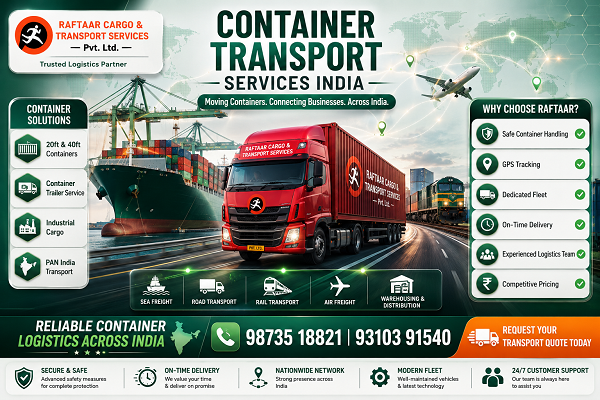
17-Jul-2026
17-Jul-2026
01-Jul-2026
01-Jul-2026
09-Jun-2026
09-Jun-2026
.jpg)
28-Jan-2026

28-Jan-2026
28-Jan-2026
23-Dec-2025


.png)
.png)
.png)



.png)
.png)